
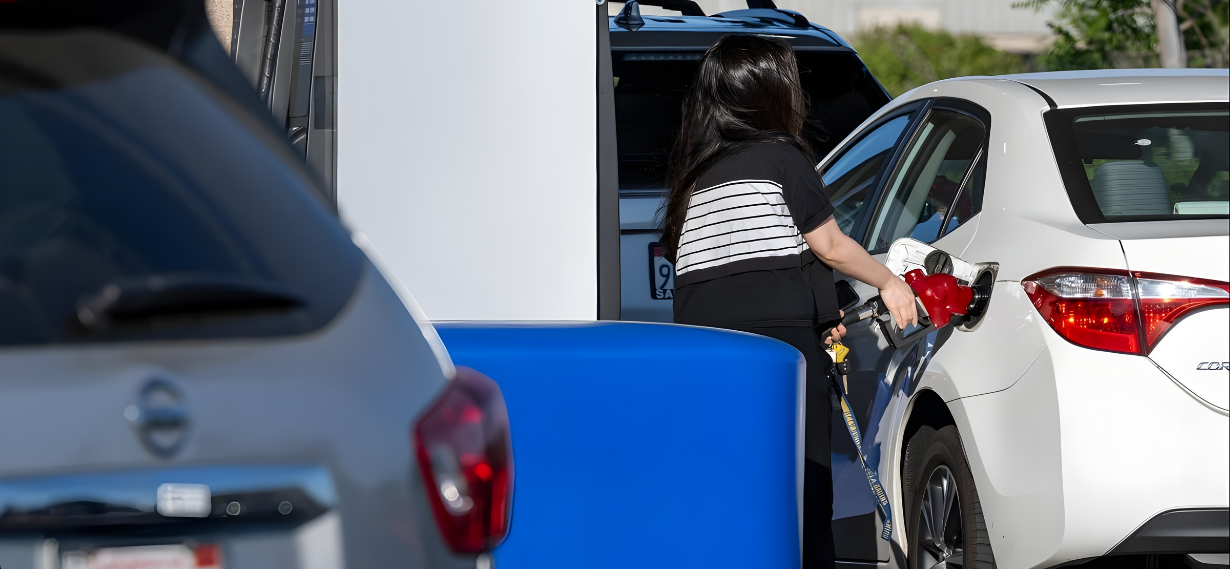
Fuel prices in the United States have crossed a critical threshold, with the national average for gasoline exceeding $4 per gallon for the first time since 2022. The sharp increase comes amid escalating geopolitical tensions and disruptions in global oil supply, placing renewed financial pressure on American households and raising concerns about inflation and economic stability.
Why US Gas Prices Have Crossed $4
The recent surge in fuel prices is largely linked to global supply shocks triggered by ongoing conflict in the Middle East, particularly involving Iran. The disruption of key oil supply routes, especially the Strait of Hormuz, has significantly impacted global crude oil availability.
According to recent data, the average price of gasoline reached around $4.02 per gallon, marking a steep rise of over 30 percent within weeks.
Oil prices have also climbed above $100 per barrel, reflecting tightening supply and heightened uncertainty in global markets.
Impact of the Iran Conflict on Global Oil Markets
The ongoing conflict has played a central role in driving fuel prices higher. The Strait of Hormuz, a critical oil transit route responsible for nearly one-fifth of global oil shipments, has faced disruptions, causing a ripple effect across international markets.
Energy analysts note that any prolonged blockage or instability in the region can quickly translate into higher fuel costs worldwide.
Additionally, crude oil prices surged sharply following military escalations, pushing fuel costs higher not just in the US but globally.
Economic Pressure on Consumers
The rise in gas prices is already affecting everyday life in the United States. Higher fuel costs are increasing transportation expenses, which in turn raise the prices of goods and services.
Reports indicate that American drivers have collectively spent billions more on fuel since the crisis began, reflecting the immediate financial burden.
Experts warn that rising fuel costs could reduce consumer spending and slow economic growth. Many households are adjusting their budgets to cope with the increased cost of living.
What Experts Are Saying
Economic analysts describe the current situation as a supply-driven price shock. Since crude oil accounts for roughly half of gasoline prices, fluctuations in global oil markets directly impact prices at the pump.
Industry experts also highlight that gas station operators have limited control over pricing, as costs are largely dictated by international oil markets and refining expenses.
Some forecasts suggest prices could climb further, potentially reaching $4.25 to $4.45 per gallon in the near term if supply disruptions persist.
Comparison with 2022 Fuel Crisis
The last time US gas prices crossed $4 was in 2022, following the Russia-Ukraine conflict. However, analysts say the current situation may feel more severe due to ongoing inflation and weaker economic conditions.
Unlike 2022, when consumers had stronger savings buffers after the pandemic, many households now face tighter financial conditions, making fuel price increases more impactful.
Global and Future Implications
The surge in US gas prices reflects a broader global energy crisis. Countries worldwide are experiencing rising fuel costs due to interconnected supply chains and geopolitical tensions.
If the conflict continues or worsens, experts warn that fuel prices could remain elevated for an extended period. This may contribute to prolonged inflation and economic uncertainty.
Conclusion
The rise of US gas prices above $4 per gallon marks a significant milestone in the ongoing global energy crisis. Driven by geopolitical tensions and supply disruptions, the increase is placing pressure on consumers and businesses alike.
As the situation evolves, the trajectory of fuel prices will depend largely on developments in global oil markets and efforts to stabilize supply chains. For now, higher fuel costs remain a key concern for both policymakers and the public.
FAQs
Why have US gas prices exceeded $4 per gallon?
Gas prices have risen due to global oil supply disruptions, mainly caused by geopolitical tensions and conflict affecting major oil transit routes.
When was the last time gas prices were this high?
The last time US gas prices crossed $4 per gallon was in 2022 during the Russia-Ukraine conflict.
Will gas prices continue to rise?
Experts suggest prices could increase further if supply disruptions persist, especially if geopolitical tensions remain unresolved.
How do higher gas prices affect the economy?
Higher fuel costs increase transportation and production expenses, leading to inflation and reduced consumer spending.
Are gas stations responsible for high prices?
No, most fuel prices are determined by global oil markets, refining costs, and taxes rather than individual gas stations.