
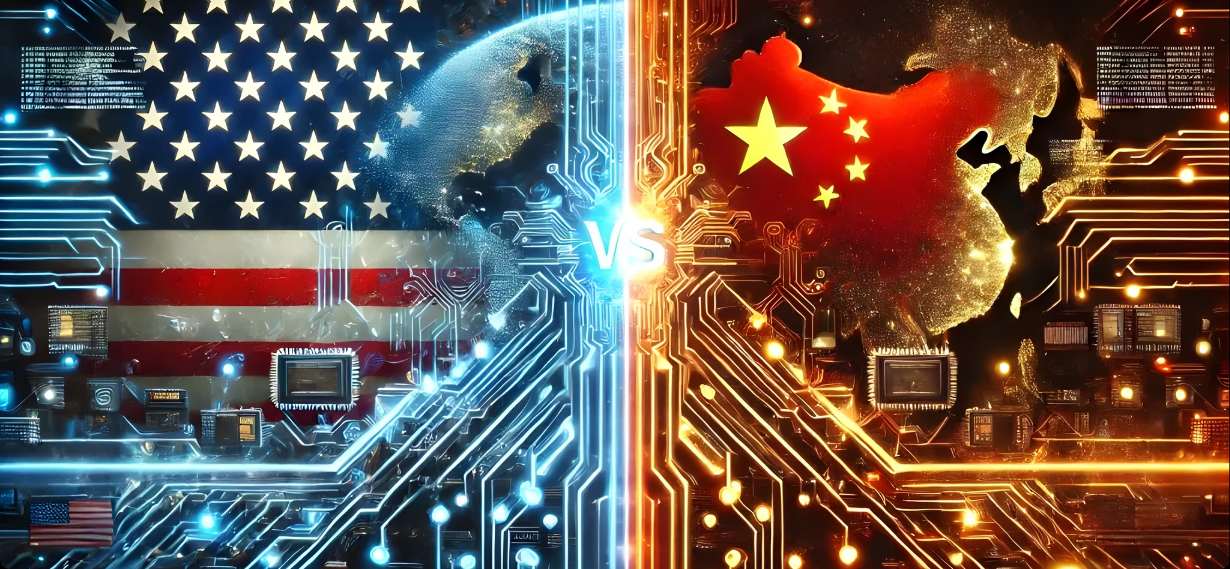
A recent report by Stanford University has highlighted a major shift in the global technology landscape, showing that China has nearly closed the performance gap with the United States in artificial intelligence (AI). The development is being seen as a turning point in the global AI race—and it could carry important implications for Pakistan.
According to the Stanford AI Index, the gap between top AI models from the US and China has narrowed significantly, with performance differences shrinking to near parity on key benchmarks.
While the United States still leads in investment, advanced chips, and infrastructure, China has rapidly caught up in areas such as research output, patents, and practical deployment of AI technologies.
This shift signals that AI is no longer dominated by a single country but is becoming a more competitive and global field.
For Pakistan, this evolving landscape presents both opportunities and challenges.
One of the biggest advantages lies in accessibility. Chinese AI models are increasingly open-source and cost-efficient, making them more accessible to developing countries. This lowers the barrier for Pakistani startups, universities, and developers to build AI-based solutions without massive investment.
Secondly, Pakistan could benefit through collaboration and technology transfer. As China expands its AI ecosystem globally, countries like Pakistan may gain access to tools, training, and infrastructure through partnerships, particularly under existing economic and technological cooperation frameworks.
Experts also point out that AI adoption can significantly boost productivity and economic growth. Globally, businesses are rapidly integrating AI into operations, with usage rising sharply in recent years.
For Pakistan, this could mean improvements in sectors like agriculture, healthcare, education, and governance if AI tools are effectively implemented.
However, challenges remain. Pakistan still faces limitations in AI infrastructure, skilled workforce, and investment levels. Without strong policy direction and investment in education and technology, the country risks falling behind even as global access improves.
Analysts believe that the narrowing gap between the US and China creates a more multipolar AI world, where countries like Pakistan have a better chance to participate rather than just consume technology.
The key question now is whether Pakistan can leverage this opportunity—by investing in skills, encouraging innovation, and forming strategic partnerships—to become an active player in the global AI ecosystem rather than a passive observer.